Laser Ablation Techniques Expanding Industrial Applications
Observing Laser Ablation’s Rapid Evolution for Industrial Manufacturing
For more than half a century, Rudzinsky Associates has maintained a front-row seat in the lasers, optics, and photonics sectors as talent subject matter experts. During this time, we have witnessed the transformative ascent of precision manufacturing and advanced material processing. Among the most significant breakthroughs is laser ablation, a specialized process that employs high-intensity laser beams for controlled material removal. By ensuring minimal heat damage and unparalleled accuracy, laser ablation is redefining production methods across an ever-growing range of industries—including microelectronics, aerospace, and medical device manufacturing.
The advent of higher laser power outputs, better beam quality, and flexible wavelength options has dramatically expanded the spectrum of ablation applications. In turn, large investments and research initiatives—often backed by collaborations between equipment vendors and materials scientists—continue to accelerate the pace of innovation. By offering deep technical expertise and recruiting services, Rudzinsky Associates helps match talented professionals with organizations seeking to leverage these cutting-edge advancements in laser ablation.
Precision Material Removal Techniques Transforming Multiple Industries
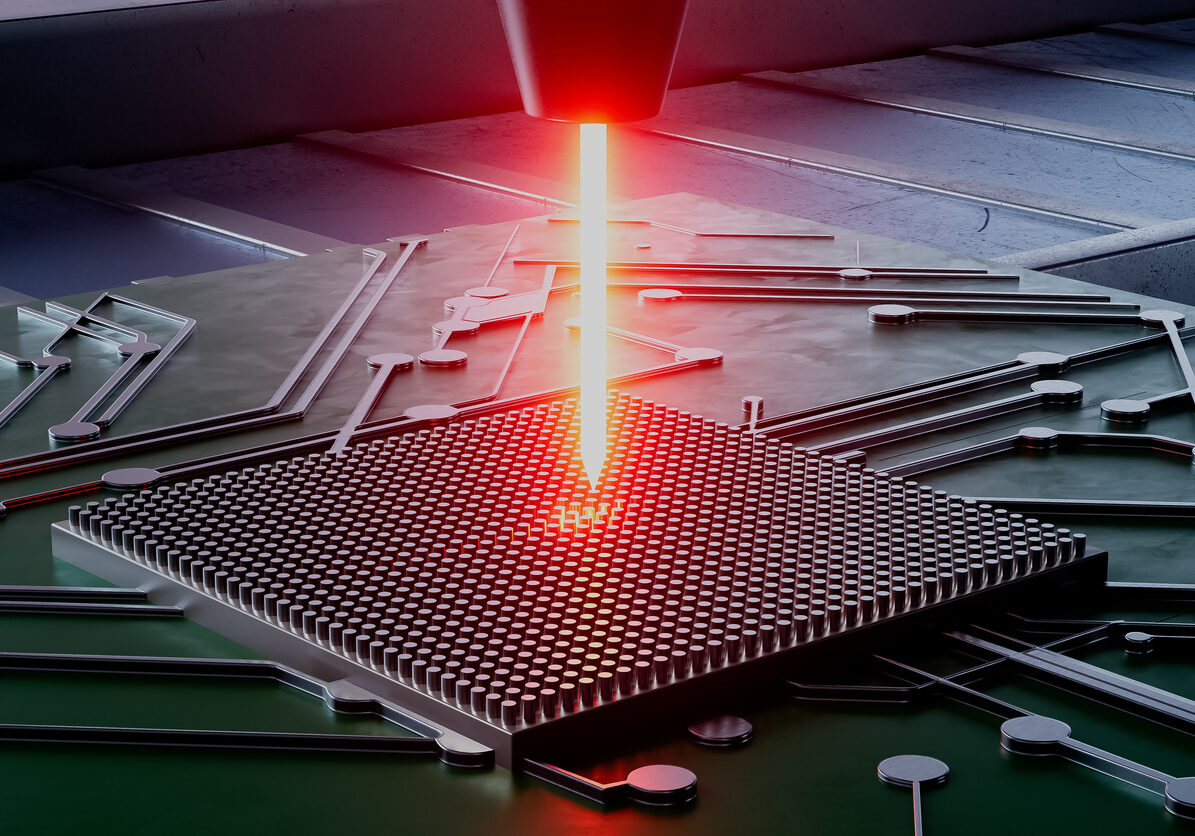
Laser ablation thrives wherever ultra-fine, reliable, and repeatable material removal is needed. This technique can vaporize unwanted material with outstanding control, delivering a pristine finished surface. Because the laser never makes direct contact, the mechanical stress usually associated with traditional machining methods is practically eliminated, preserving the structural integrity of delicate or compact parts.
Two sectors where laser ablation has particularly made its mark are aerospace and consumer electronics. In aerospace, laser ablation streamlines complex part design and upkeep without compromising safety. Meanwhile, in consumer electronics, the precise removal of thin films or protective layers allows manufacturers to compress device footprints and enhance overall performance. These developments underscore just how vital laser ablation has become for next-generation product designs.
Aerospace and Consumer Electronics Applications
Aerospace manufacturing demands components with sophisticated geometries and near-flawless structural strength. Laser ablation addresses these requirements by offering targeted surface finishing, from eliminating contaminants to refining part features. The process also minimizes the risk of thermal distortion, a critical advantage when working with sensitive alloys and composite materials.
In the consumer electronics realm, the pursuit of ever-thinner devices and denser circuit layouts calls for more advanced material processing methods. Laser ablation excels at removing thin layers of metal, polymer, or ceramic to enable new device architectures and innovative design elements. As engineering teams strive for higher integration with minimal footprint, the laser’s ability to sculpt features without physical contact promotes both quality and manufacturing efficiency.
Microelectronics and Data Storage Breakthroughs
Modern microelectronics rely on continuous miniaturization, with semiconductor manufacturers seeking ways to incorporate more transistors into smaller volumes. Laser ablation responds to this demand by delivering ultra-fine resolutions, ideal for etching, drilling, or layer removal in advanced chip architectures. A growing application is laser-based debonding, a process that supports the creation of 3D integrated circuits featuring multiple semiconductor layers stacked together.
In the expansive data storage industry, laser ablation is used to form carefully sized apertures on optical discs, as well as thin-film heads in magnetic drives. When this capability is paired with real-time imaging—such as high-speed cameras or specialized microscopy—engineers can quickly adjust parameters based on live feedback. This iterative approach boosts both accuracy and repeatability in processes crucial for profitable, large-scale data storage production.
Innovations in Medical Devices and Implant Manufacturing
High-precision manufacturing is paramount in healthcare settings, where patient safety depends on stringent quality standards. Laser ablation presents a near-perfect solution for shaping medical parts and implants made from biocompatible metals or alloys. By using tightly controlled laser pulses, engineers can form smooth edges and surfaces that minimize irritation and promote healthy integration within the human body.
Pacemaker components, for example, may require ultra-precise geometric modifications to ensure reliable function. Orthopedic implants must balance complex shapes with mechanically robust surfaces. In these scenarios, laser ablation’s gentle, localized approach prevents heat from diffusing into surrounding areas, mitigating any risk of micro-cracks or structural compromise. As the industry shifts toward more patient-specific implants, laser ablation enables truly customized designs that optimize both function and compatibility.
Driving Efficiency with Advanced Laser Source Innovations
While laser ablation has been available for decades, recent laser source breakthroughs have radically increased its functionality and throughput. Higher power lasers with stable beam quality can rapidly remove more material, thus enhancing speed and productivity. At the same time, manufacturers no longer have to accept trade-offs between speed and precision—a crucial step forward in reducing production costs.
Variable-wavelength lasers have further diversified the range of materials suitable for ablation. The ability to select a specific wavelength—based on how effectively a certain substrate absorbs that light—minimizes unintended heat effects and ensures that the ablation zone is confined to the targeted region. This adaptability renders laser ablation a universal platform for companies processing everything from metals and polymers to ceramics and composites.
Ultra-Short Pulse Lasers for Minimal Thermal Impact
One of the most notable developments in laser ablation is the growing use of ultra-short pulse lasers (USPL), such as femtosecond or picosecond lasers. These devices focus extremely high energy into incredibly brief intervals, effectively vaporizing the material in a single burst. Because the heat dissipates almost instantly, the surrounding area remains unaffected, preserving delicate structures in high-precision applications.
In practical terms, this translates to faster production of microelectromechanical systems (MEMS), which rely on intricate features for sensing, actuation, and communication. It also improves selective layer removal in semiconductor wafers, creating nano-scale features without leaving behind micro-cracks or residual stress. By limiting heat-induced damage, ultra-short pulse lasers decrease scrap rates and bolster process reliability.
High-Power Fiber Lasers and Hybrid Systems
After years of refinement, fiber lasers have become increasingly popular for ablation. They offer robust designs, lower operational costs, and excellent beam quality. Modern fiber lasers can now handle thicker metal layers, once limited to slower or more specialized laser types. This cost-effective approach makes fiber lasers particularly compelling for wide-scale adoption in automotive, aerospace, and other commercial production lines.
Additionally, hybrid laser systems combine the advantages of different laser technologies—such as diode-pumped solid-state (DPSS), fiber, or CO2—within a single workstation. Operators can switch between wavelengths or laser modes to accommodate diverse material requirements. By eliminating the need for separate, dedicated systems, hybrid platforms streamline operations and offer businesses significant returns on capital investments.
Research Collaborations Fueling Emerging Materials and Applications
Multidisciplinary research plays an essential role in propelling laser ablation into uncharted territories. Universities, government labs, and private R&D centers are joining forces to advance beam delivery methods, improve real-time imaging capabilities, and refine ablation parameters. One powerful tool is optical coherence tomography (OCT), which offers unprecedented visibility into subsurface interactions between the laser beam and the workpiece.
These collaborations also encourage exploring novel uses. The automotive industry is experimenting with ablative texturing of engine components to improve lubrication and durability, as well as material subtraction for lighter designs. In the realm of consumer electronics, manufacturers of glass and sapphire displays rely on laser ablation for smoother edges, decreasing chipping and speeding up product innovation cycles. As more sectors adopt this technique, research and development efforts continue to expand, seeded by the promise of greater efficiency and new product categories.
Cross-Industry Collaborative Platforms and Open-Source Developments
Global consortiums and open-source platforms are increasingly prominent, bringing together industry leaders, smaller vendors, and academic researchers. By standardizing software interfaces and safety protocols, these alliances lower the barriers to entry—particularly for startups or smaller companies eager to harness laser ablation’s vast potential. Common data formats and consistent operating procedures shorten the time from initial prototype to mass production, further democratizing access to cutting-edge laser technology.
Vendors benefit as well, since feedback collected from multiple users highlights new features or design modifications for next-generation laser systems. This open-exchange model creates a feedback loop: industry needs fuel research, and research breakthroughs shape new, improved systems. As each party refines and validates new ideas, the capabilities of laser ablation continue to proliferate across diverse fields.
Implementing Laser Ablation: Practical Considerations for Industrial Success
Adopting laser ablation requires a systematic review of process parameters, material compatibility, and infrastructure readiness. Before making substantial investments, companies often conduct cost-benefit analyses that weigh equipment pricing, workforce development, and expected efficiency gains. Successful implementation also hinges on robust operator training, ensuring that staff can handle laser safety, calibrate systems, and interpret monitoring data in real time.
Choosing the correct laser source configuration is another critical decision. Variables such as wavelength, power, and pulse duration profoundly affect outcomes. Suboptimal choices could result in surface defects, excessive heat input, or downgraded production speeds. Partnering with reputable laser equipment vendors—and possibly leveraging guidance from systems integrators—can streamline these decisions and optimize long-term performance.
- Match laser type with part geometry and material properties
- Establish standard operating procedures for ablation parameters
- Utilize inline monitoring and high-speed cameras for real-time feedback
- Offer laser safety and system controls training to operators
- Adopt a preventive maintenance plan to avoid unexpected downtime
Ultimately, integrating laser ablation into an existing workflow can accelerate product development and maintain stringent quality standards. By carefully orchestrating the transition, companies can reduce production interruptions and achieve higher throughput, thus boosting overall profitability.
Bridging the Talent Gap: Staffing Specialized Laser Ablation Roles
The rapid expansion of laser ablation solutions has created a significant demand for qualified professionals. Specialized roles in laser physics, optical engineering, and system integration are challenging to fill—largely because these fields demand a deep understanding of both theoretical physics and practical, hands-on experience with high-end equipment. Project managers with the ability to lead cross-functional teams are also in high demand, as they must coordinate R&D, manufacturing, and vendor relationships seamlessly.
Educational institutions are responding by offering targeted programs and research opportunities in laser engineering. Meanwhile, industry players organize seminars, webinars, and certification courses for established engineers looking to expand their skill sets. These professional development paths facilitate knowledge sharing and strengthen the overall talent pool. Networking at industry events and conferences can also help companies find and recruit the specialists they need to innovate at scale.
In this recruitment-intensive environment, a strategic approach to talent acquisition can make all the difference. Engaging with veteran recruiting firms experienced in the lasers, optics, and photonics world allows organizations to build teams that can optimize laser ablation technologies to meet evolving production demands—and do so both efficiently and effectively.
Maximizing the Future Impact of Laser Ablation
Across global manufacturing, companies are transferring more responsibilities to highly accurate, non-contact techniques that minimize waste and deliver consistent results. Laser ablation fits perfectly within this paradigm, offering unmatched control over material removal processes—whether for nano-scale features in microelectronics or heavier-duty applications in aerospace assembly. As ultra-short pulse and high-power fiber lasers become more refined, the range of achievable ablation tasks will only broaden.
Additionally, breakthroughs in automation and real-time imaging are making ablation workflows more adaptive. Automatic feedback systems can fine-tune laser parameters within milliseconds, guaranteeing uniform outcomes even for complex or layered materials. These augmentations reduce operator interventions, saving companies time and resources. Meanwhile, cross-sector partnerships continue to emerge, each new collaboration accelerating the discovery of novel laser ablation methodologies and further solidifying its position as a high-value manufacturing solution.
With worldwide interest in cost savings, environmental responsibility, and production efficiency, it is clear that laser ablation stands at the nexus of innovation in modern manufacturing. Whether enhancing safety in aerospace components, advancing data density for storage devices, or creating body-friendly medical implants, the technology reshapes how products are designed and produced. For organizations ready to adopt these advanced processes, assembling a capable team of specialized engineers and scientists becomes paramount.
Backed by decades of recruitment expertise in lasers, optics, and photonics, Rudzinsky Associates provides a vital link between laser ablation’s evolving frontiers and the skilled professionals needed to realize its full potential. By building future-ready teams, companies can confidently embrace new developments in laser ablation and secure a competitive advantage in the rapidly changing industrial landscape.